Ludum Dare #47compo
Endless Orbits
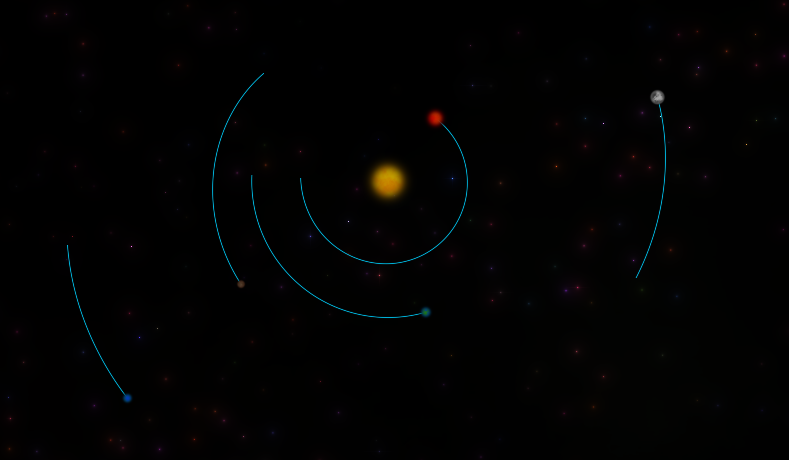
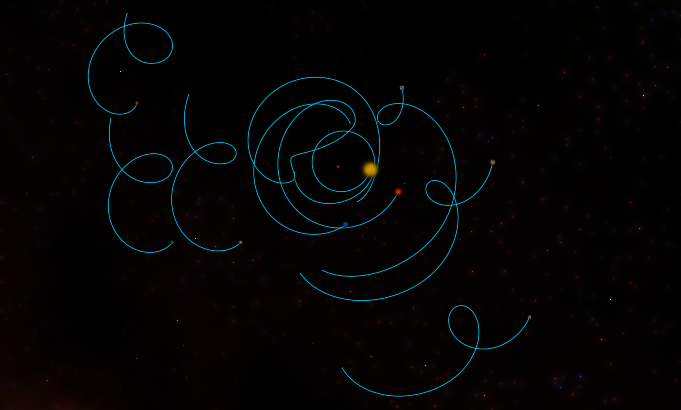
This is mostly just a fun demo of N-body orbital mechanics, so while I have added some game mechanics you can ignore them if you want as it was done slightly last minute. The main thing is that you can watch how complex systems of satellites evolve over time. You can spawn more planets in, and even show the paths that they will follow over time. Right clicking on a planet will change the frame of reference to that planet so you can see just how weird orbits can get.
If you want to play the "game", you need to shoot chunks of a planet off into the solar system, trying to get them to reach infinity (cross the red circle). However, you only have a small amount of mass on the planet so how many objects can you get to escape, and how much mass can you send.
Warning, this is doing a fairly slow N-body orbital mechanics simulation so spawning too many planet will make things run slowly. This is especially true when future path prediction is enabled
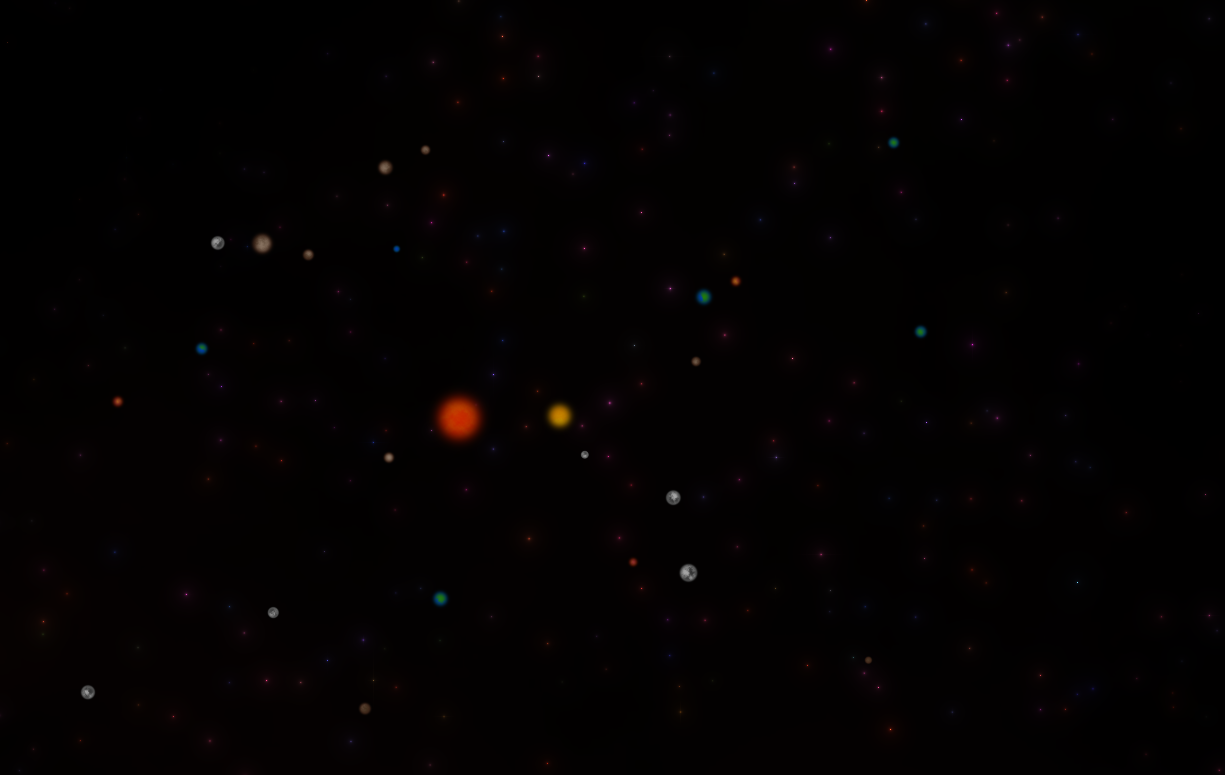
WebGl build does not show background stars properly due to shader stuff, and probably runs poorly. I would recommend using a standalone build if possible.
Controls:
- Left click to fire a piece of the home planet
- Q/E move starting point to fire parts of your planet from
- Right clock to select a different planet to use as a reference
- Middle mouse/WASD/Arrow Keys to pan camera
- Scroll wheel to zoom
- Escape to bring up the menu
Made Using:
- Unity 2020.1.3f1
- Visual Studio
- Photoshop
There is probably some bugs, so let me know and I'll try to take a look.



Comments15
Interesting physical game!
@quinn-patrick Thanks, I had a look at that other game, its pretty neat. I wonder what its like with N-body physics, I guess its gets quite confusing.
@finalforeach Yes, its mostly a result of how I check how much planet mass it remaining, but also I wasn't sure how to deal with some other object colliding with it so I left it as it was.
@anomay The orbits shake due to floating point inaccuracy combined with a poor method of integrating acceleration and velocity. The accuracy is based on the time step, I use 0.005 for the actual update, but only 0.02 for the prediction so its not particularly accurate.
@cagibi Thank you. I hadn't thought of that for the music, but I guess it works.
Nice work getting all this set up in just 48 hours, particularly the prediction system!
I do not know what to tell you about the "toy" except that we need more stuff like this) I also will be looking at the source for research purposes(if you dont mind), bc i had an itch to do something with n-body physics for a long time.